Bookshelf

Freedom
- zionism
- cerulean warblers
- human overpopulation
- strip-mining
- liberalism
- environmentalism
Keep track of it on your own bookshelf.
Log in to add itAbout this book
Patty and Walter Berglund were the new pioneers of old St. Paul—the gentrifiers, the hands-on parents, the avant-garde of the Whole Foods generation. Patty was the ideal sort of neighbor, who could tell you where to recycle your batteries and how to get the local cops to actually do their job. She was an enviably perfect mother and the wife of Walter's dreams. Together with Walter—environmental lawyer, commuter cyclist, total family man—she was doing her small part to build a better world.
But now, in the new millennium, the Berglunds have become a mystery. Why has their teenage son moved in with the aggressively Republican family next door? Why has Walter taken a job working with Big Coal? What exactly is Richard Katz—outré rocker and Walter's college best friend and rival—still doing in the picture? Most of all, what has happened to Patty? Why has the bright star of Barrier Street become "a very different kind of neighbor," an implacable Fury coming unhinged before the street's attentive eyes?
In his first novel since The Corrections, Jonathan Franzen has given us an epic of contemporary love and marriage. Freedom comically and tragically captures the temptations and burdens of liberty: the thrills of teenage lust, the shaken compromises of middle age, the wages of suburban sprawl, the heavy weight of empire. In charting the mistakes and joys of Freedom's characters as they struggle to learn how to live in an ever more confusing world, Franzen has produced an indelible and deeply moving portrait of our time.
Quotes by Jonathan Franzen
From WikiquoteOne of the consolations of dying... Seriously, the world is changing so quickly that if you had any more than 80 years of change I don't see how you could stand it psychologically.
Depression presents itself as a realism regarding the rottenness of the world in general and the rottenness of your life in particular.
An ink bottle, which now seems impossibly quaint, was still thinkable as a symbol in 1970.
More by Jonathan Franzen
All books-
The CorrectionsJonathan FranzenThe CorrectionsJonathan Franzen
-
CrossroadsJonathan FranzenCrossroadsJonathan Franzen

-
Strong MotionJonathan FranzenStrong MotionJonathan Franzen

-
Kraus ProjectJonathan FranzenKraus ProjectJonathan Franzen

-
Pureza2015Pureza

-
The Twenty-Seventh City (Bestselling Backlist)1988The Twenty-Seventh City (Bestselling Backlist)

-
How to Be Alone2002How to Be Alone
-
The Discomfort Zone2006The Discomfort Zone

-
The End of the End of the Earth2018The End of the End of the Earth

-
Farther Away2012Farther Away

-
The Best American Short Stories 19971997The Best American Short Stories 1997

-
Das Kraus-Projekt2014Das Kraus-Projekt

-
The best American essays 20162016The best American essays 2016

-
Vivre à deux2011Vivre à deux

-
La zone d'inconfort2008La zone d'inconfort

-
El hombre del traje gris2009El hombre del traje gris

Similar books
by subject-
The Pelican BriefJohn GrishamThe Pelican BriefJohn Grisham

-
Coming Up for AirGeorge OrwellComing Up for AirGeorge Orwell
-
The Dutch HouseAnn PatchettThe Dutch HouseAnn Patchett

-
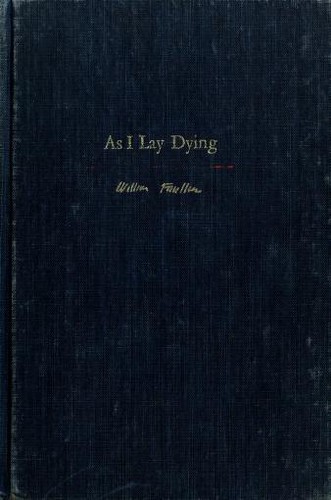
As I Lay DyingWilliam FaulknerAs I Lay DyingWilliam Faulkner
-
The DinnerHerman KochThe DinnerHerman Koch

-
The RadleysMatt HaigThe RadleysMatt Haig

-
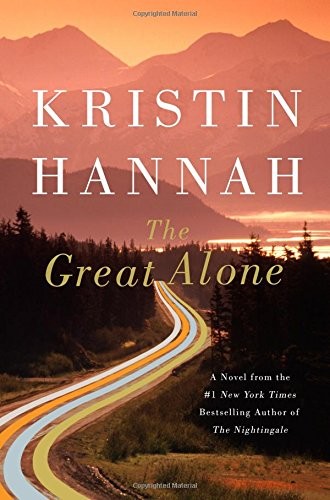
The Great AloneKristin HannahThe Great AloneKristin Hannah
-
EligibleCurtis SittenfeldEligibleCurtis Sittenfeld

-
My Name is Lucy BartonElizabeth StroutMy Name is Lucy BartonElizabeth Strout

-
Burmese DaysGeorge OrwellBurmese DaysGeorge Orwell

-
Black House, thePatricia HighsmithBlack House, thePatricia Highsmith

-
The BlundererPatricia HighsmithThe BlundererPatricia Highsmith