Bookshelf

Keep track of it on your own bookshelf.
Log in to add itAbout this book
The Dawn of Day (German: Morgenröte – Gedanken über die moralischen Vorurteile; historical orthography: Morgenröthe – Gedanken über die moralischen Vorurtheile) is a 1881 book by the German philosopher Friedrich Nietzsche (also translated as "The Dawn" and Daybreak: Thoughts on the Prejudices of Morality). Nietzsche de-emphasizes the role of hedonism as a motivator and accentuates the role of a "feeling of power." His relativism, both moral and cultural, and his critique of Christianity also reaches greater maturity. In Daybreak Nietzsche devoted a lengthy passage to his criticism of Christian biblical exegesis, including its arbitrary interpretation of objects and images in the Old Testament as prefigurements of Christ's crucifixion. The polemical, antagonistic and informal style of this aphoristic book—when compared to Nietzsche's later treatments of morality—seems most of all to invite a particular experience. In this text Nietzsche was either not effective at, or not concerned with, persuading his readers to accept any specific point of view. Yet the discerning reader can note here the prefigurations of many of the ideas more fully developed in his later books. For example, the materialism espoused in this book might seem reducible to a naive scientific objectivism which reduces all phenomena to their natural, mechanical causes. Yet that is very traightforwardly not Nietzsche's strongest perspective, perhaps traditionally most well-expressed in The Gay Science.
Quotes
From WikiquoteChristianity has succeeded in transforming Eros and Aphrodite—great powers capable of idealisation—into diabolical kobolds and phantoms.
The surest way to corrupt a youth is to instruct him to hold in higher esteem those who think alike than those who think differently.
More by Friedrich Nietzsche
All books-
Why I Am so CleverFriedrich NietzscheWhy I Am so CleverFriedrich Nietzsche
-
Nietzsche WerkeFriedrich NietzscheNietzsche WerkeFriedrich Nietzsche

-
Untimely MeditationsFriedrich NietzscheUntimely MeditationsFriedrich Nietzsche

-
Also sprach ZarathustraFriedrich NietzscheAlso sprach ZarathustraFriedrich Nietzsche

-
Die Fröhliche WissenschaftFriedrich NietzscheDie Fröhliche WissenschaftFriedrich Nietzsche

-
Der AntichristFriedrich NietzscheDer AntichristFriedrich Nietzsche

-
NietzscheFriedrich NietzscheNietzscheFriedrich Nietzsche

-
Fröhliche WissenschaftFriedrich NietzscheFröhliche WissenschaftFriedrich Nietzsche

-
Die Geburt der TragödieFriedrich NietzscheDie Geburt der TragödieFriedrich Nietzsche

-
The portable NietzscheFriedrich NietzscheThe portable NietzscheFriedrich Nietzsche

-
WerkeFriedrich NietzscheWerkeFriedrich Nietzsche

-
The complete works of Friedrich NietzscheFriedrich NietzscheThe complete works of Friedrich NietzscheFriedrich Nietzsche

-
Zur Genealogie der MoralFriedrich NietzscheZur Genealogie der MoralFriedrich Nietzsche

-
Wille zur MachtFriedrich NietzscheWille zur MachtFriedrich Nietzsche

-
Jenseits von Gut und BöseFriedrich NietzscheJenseits von Gut und BöseFriedrich Nietzsche

-
The Nietzsche-Wagner correspondenceFriedrich NietzscheThe Nietzsche-Wagner correspondenceFriedrich Nietzsche

Similar books
by subject-
Either/orSøren KierkegaardEither/orSøren Kierkegaard
-
The RebelAlbert CamusThe RebelAlbert Camus
-
The Dream of a Ridiculous ManFyodor DostoyevskyThe Dream of a Ridiculous ManFyodor Dostoyevsky

-
White NightsFyodor DostoyevskyWhite NightsFyodor Dostoyevsky

-
The FallAlbert CamusThe FallAlbert Camus

-
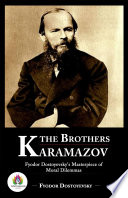
The Brothers KaramazovFyodor DostoyevskyThe Brothers KaramazovFyodor Dostoyevsky
-
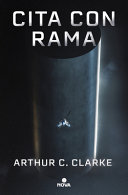
Cita con ramaArthur C. ClarkeCita con ramaArthur C. Clarke
-
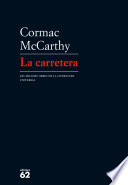
La carreteraCormac Mc CarthyLa carreteraCormac Mc Carthy
-
Leddy & Pepper's Professional NursingLucy J HoodLeddy & Pepper's Professional NursingLucy J Hood

-
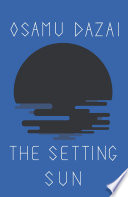
The Setting SunOsamu DazaiThe Setting SunOsamu Dazai
-
Crime and PunishmentFyodor DostoevskyCrime and PunishmentFyodor Dostoevsky

-
No soy un monstruoCarme ChaparroNo soy un monstruoCarme Chaparro