Bookshelf
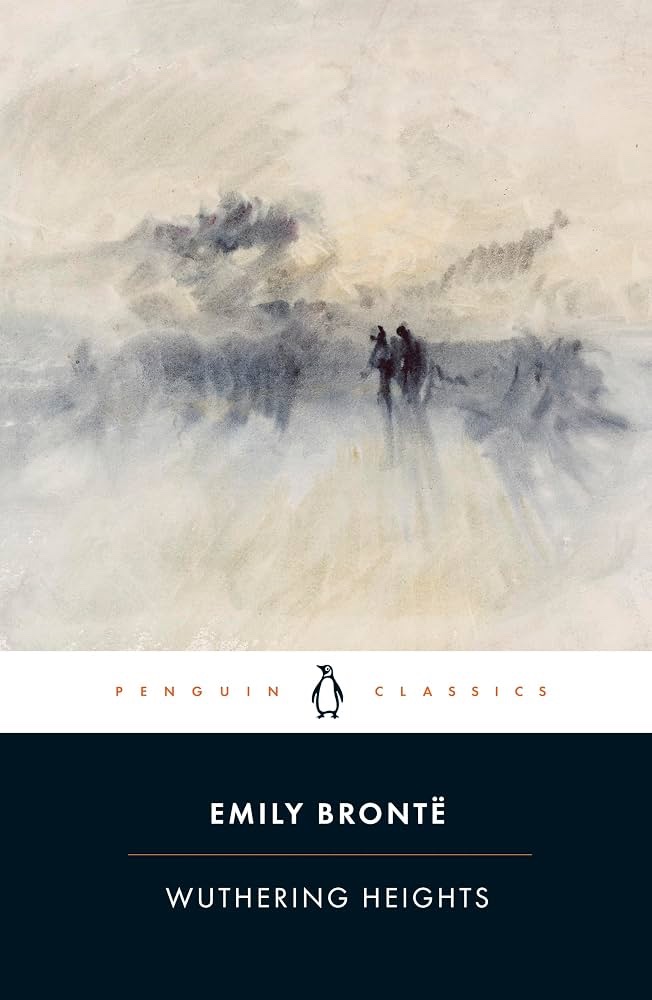
Wuthering Heights
- children's fiction
- classic fiction
- classic literature
- country homes
- country life
- cousins
Keep track of it on your own bookshelf.
Log in to add itAbout this book
The Novel
Wuthering Heights tears off, roughly enough, the tinsel from passion. We have Heathcliff, harsh, pitiless, wolfish, without a spark of kindness for the woman whose passion yet fills his whole life, with less than kindness for his fellow-men; a human wild beast, uncommon but not unnatural, of whom there are many around us muzzled by society, and who show their fangs only in troubled times. The woman, too, equally dead to pity, but without downright malevolence, is bright and biting as a clear day in winter. The passion of these human tigers for each other is pure love, or rather sheer love. Without the shadow of remorse for the share he had in her fate, he lives through many years with his heart moaning for his love; he hears her in the wailing winds, he sees her in the midnight mists; when he dies, worn out by his heated brain, the hope that smiles on his brow is to have his place in the church-yard corner where she lies; brighter than heaven to him, to lie by the side of the dead woman. — American Review, March 1850
The Author
Emily Brontë (30 July 1818 – 19 December 1848) is best known for her only novel, Wuthering Heights, now considered a classic of English literature. Emily was the third eldest of the four surviving Brontë siblings, between the youngest Anne and her brother Branwell. She wrote under the pen name Ellis Bell.
Contemporary Reviews
American Whig Review, 1848 — Nothing like it has ever been written before; it is to be hoped that in respect of its faults, for the sake of good manners, nothing will be hereafter. Let it stand by itself, a coarse, original, powerful book,— one that does not give us true characters, but horridly striking and effective ones. It will live a short and brilliant life, and then die and be forgotten. Now if the rank of a work of fiction is to depend solely on its naked imaginative power, then this is one of the greatest novels in the language.
Holden’s Dollar Magazine, 1848 – Jane Eyre was written to illustrate the evils of an uncongenial marriage, Wuthering Heights to illustrate the evils of keeping two souls asunder, whose affinities rendered a union essential to the happiness of each. Such frightful, horrible, and heart-crushing, yet perfectly natural experiences as the two books relate, could never have been given with such appalling energy, but by one who had felt the evils which are so forcibly described.
Atlas, January 1848 — Wuthering Heights is a strange, inartistic story. There are evidences in every chapter of a sort of rugged power—an unconscious strength—which the possessor seems never to think of turning to the best advantage. The general effect is inexpressibly painful. We know nothing in the whole range of our fictitious literature which presents such shocking pictures of the worst forms of humanity. Jane Eyre is a book which affects the reader to tears; it touches the most hidden sources of emotion. Wuthering Heights casts a gloom over the mind not easily to be dispelle
Quotes
From WikiquoteNo, I'm running on too fast: I bestow my own attributes over-liberally on him.
No, reprobate! You are a castaway - be off, or I'll hurt you seriously! I'll have you all modeled in wax and clay; and the first who passes the limits I fix, shall — I'll not say what he shall be done to — but, you'll see! Go, I'm looking at you!
I am now quite cured of seeking pleasure in society, be it country or town. A sensible man ought to find sufficient company in himself.
Rough as a saw-edge, and hard as whinstone! The less you meddle with him the better.
More by Emily Brontë
All books-
Poems by Currer, Ellis, and Acton Bell1846Poems by Currer, Ellis, and Acton Bell
-
Wuthering Heights / Agnes Grey1870Wuthering Heights / Agnes Grey

-
The secret life of Laszlo, Count Dracula1989The secret life of Laszlo, Count Dracula
-
Novels (Agnes Grey / Jane Eyre / Wuthering Heights)1947Novels (Agnes Grey / Jane Eyre / Wuthering Heights)

-
Works (Poems / Wuthering Heights)1907Works (Poems / Wuthering Heights)
-
Novels (Jane Eyre / Wuthering Heights)1943Novels (Jane Eyre / Wuthering Heights)

-
Novels (Jane Eyre / Tenant of Wildfell Hall / Wuthering Heights)1982Novels (Jane Eyre / Tenant of Wildfell Hall / Wuthering Heights)
-
The complete poems of Emily Jane Brontë1941The complete poems of Emily Jane Brontë

-
The professor and poems1874The professor and poems

-
Poems of Charlotte, Emily and Anne Brontë with Cottage Poems1893Poems of Charlotte, Emily and Anne Brontë with Cottage Poems

-
Gondal's queen1955Gondal's queen

-
Mystery Stories1996Mystery Stories

-
Novels (Jane Eyre / Professor / Shirley / Villette / Wuthering Heights)1975Novels (Jane Eyre / Professor / Shirley / Villette / Wuthering Heights)

-
The complete poems of Emily Brontë1908The complete poems of Emily Brontë

-
Brontë poems1915Brontë poems

-
Literature, a portable anthology2004Literature, a portable anthology

Similar books
by subject-
Pride and PrejudiceJane AustenPride and PrejudiceJane Austen

-
LolitaVladimir Vladimirovich NabokovLolitaVladimir Vladimirovich Nabokov
-
MercyJodi PicoultMercyJodi Picoult

-
DivergentVeronica RothDivergentVeronica Roth

-
InsurgentVeronica RothInsurgentVeronica Roth

-
ControlDaniel SuarezControlDaniel Suarez

-
A heartbreaking work of staggering geniusDave EggersA heartbreaking work of staggering geniusDave Eggers

-
Advanced Grammar in Use with AnswersMartin HewingsAdvanced Grammar in Use with AnswersMartin Hewings
-
English Vocabulary in Use: Advanced Book with AnswersMichael McCarthyEnglish Vocabulary in Use: Advanced Book with AnswersMichael McCarthy
-
A Court of Thorns and RosesSarah J. MaasA Court of Thorns and RosesSarah J. Maas
-
Essential Grammar in Use. Book with AnswersEssential Grammar in Use. Book with Answers
-
The Wild RobotPeter BrownThe Wild RobotPeter Brown