Bookshelf

#hashtagactivism
by Moya Bailey, Brooke Welles, Sarah Jackson
- metadata
- social media
- technology
- social aspects
- mass media
- hashtags (metadata)
Keep track of it on your own bookshelf.
Log in to add itAbout this book
This “well-researched, nuanced” study of the rise of social media activism explores how marginalized groups use Twitter to advance counter-narratives, preempt political spin, and build diverse networks of dissent (Ms.) The power of hashtag activism became clear in 2011, when #IranElection served as an organizing tool for Iranians protesting a disputed election and offered a global audience a front-row seat to a nascent revolution. Since then, activists have used a variety of hashtags, including #JusticeForTrayvon, #BlackLivesMatter, #YesAllWomen, and #MeToo to advocate, mobilize, and communicate. In this book, Sarah Jackson, Moya Bailey, and Brooke Foucault Welles explore how and why Twitter has become an important platform for historically disenfranchised populations, including Black Americans, women, and transgender people. They show how marginalized groups, long excluded from elite media spaces, have used Twitter hashtags to advance counternarratives, preempt political spin, and build diverse networks of dissent. The authors describe how such hashtags as #MeToo, #SurvivorPrivilege, and #WhyIStayed have challenged the conventional understanding of gendered violence; examine the voices and narratives of Black feminism enabled by #FastTailedGirls, #YouOKSis, and #SayHerName; and explore the creation and use of #GirlsLikeUs, a network of transgender women. They investigate the digital signatures of the “new civil rights movement”—the online activism, storytelling, and strategy-building that set the stage for #BlackLivesMatter—and recount the spread of racial justice hashtags after the killing of Michael Brown in Ferguson, Missouri, and other high-profile incidents of killings by police. Finally, they consider hashtag created by allies, including #AllMenCan and #CrimingWhileWhite.
Quotes by Moya Bailey
From WikiquoteCan a person achieve the WHO definition of health if they encounter racism, sexism, ableism, and other oppressions as a part of their daily life in the world?
The stress and material consequences of system oppression make it nearly impossible to have physical, mental, and social well-being in a white supremacist patriarchal country.
The poem “Brother” by Pat Parker addresses the violence Black women face in their own communities while trying to address systemic oppression: Brother I don’t want to hear about how my real enemy is the system. i’m no genius, but i do know that system you hit me with is called a fist.
More by Moya Bailey
All books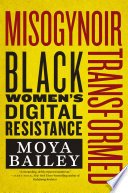
Similar books
by subject-
The happiness effectDonna FreitasThe happiness effectDonna Freitas

-
Calladita estás más guapaCarme ChaparroCalladita estás más guapaCarme Chaparro

-
Understanding Housing FinancePeter KingUnderstanding Housing FinancePeter King

-
The Subtle Art of Not Giving a F*ckMark MansonThe Subtle Art of Not Giving a F*ckMark Manson

-
Hannah's ListDebbie MacomberHannah's ListDebbie Macomber

-
MontanaDebbie MacomberMontanaDebbie Macomber

-
NextMichael LewisNextMichael Lewis

-
Teaching critical thinkingBell HooksTeaching critical thinkingBell Hooks

-
Royal WitchPhilippa GregoryRoyal WitchPhilippa Gregory
-
The Secret Diaries of Miss Miranda CheeverJulia QuinnThe Secret Diaries of Miss Miranda CheeverJulia Quinn

-
The Mosquito BowlBuzz BissingerThe Mosquito BowlBuzz Bissinger
-
Queen of Lombard StreetLisa KleypasQueen of Lombard StreetLisa Kleypas